Treating monkey and animal bites on Koh Phi Phi
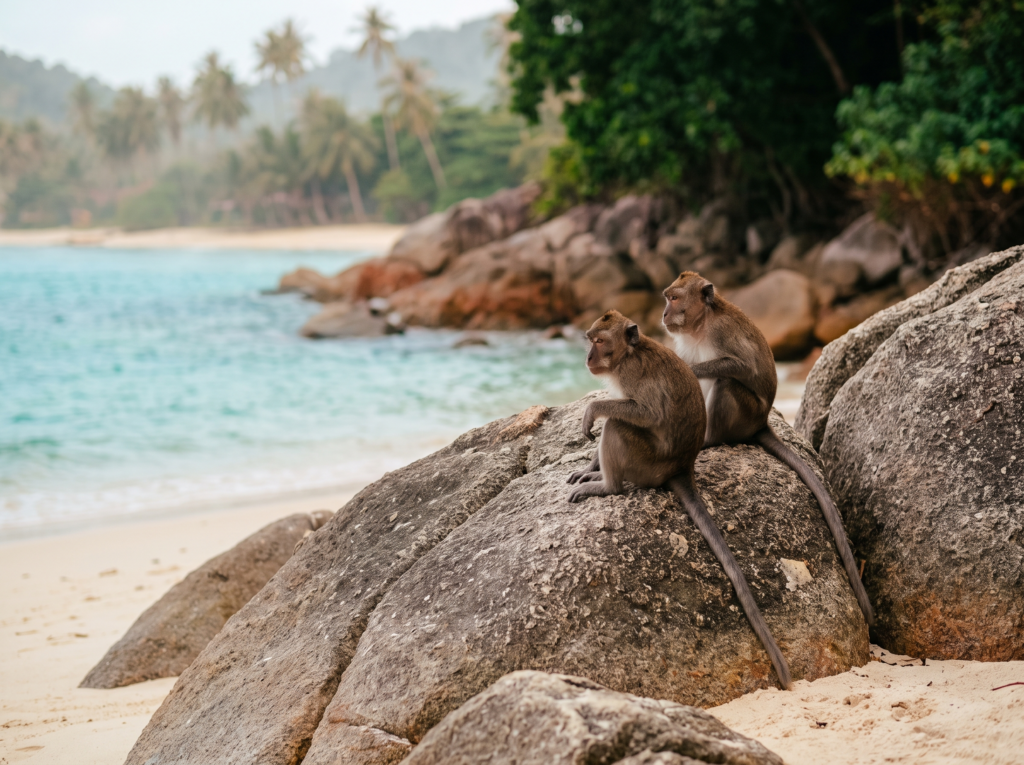
The monkeys at Monkey Beach bite people every week, and almost nobody arriving on the boat expects it. Rabies is present in Thailand, the vaccination course is time-critical, and there is no version of this that can wait until you get home. Monkey and animal bite treatment in Koh Phi Phi starts the same day, at whatever hour it happened.
Wash it for fifteen minutes. Start there.
Soap and running water, fifteen full minutes, immediately. This is not the tidying-up step before real treatment — it is one of the most effective things done for rabies exposure anywhere, and it works by physically removing and inactivating virus at the wound.
Then an iodine or alcohol-based antiseptic if available. Then come in, whatever the hour and whatever the size of the wound.
Do not close the wound yourself, do not put a tight dressing on it, and do not decide the bite was too small to matter. A scratch that barely broke the skin carries the same rabies consideration as a deep bite, because the route of infection is the same.
Rabies in Thailand, stated plainly
Rabies is present in Thailand. Once symptoms appear it is effectively always fatal, and there is no treatment at that stage. Before symptoms appear, post-exposure treatment is close to completely effective.
The incubation period is usually one to three months, occasionally much longer, which is why people convince themselves that nothing happened. Nothing has happened yet is not the same thing.
Monkeys, dogs, cats and bats can all carry it. On this island the monkey exposures dominate, because Monkey Beach is on every day-trip itinerary and the animals are habituated to people carrying food. See rabies vaccination for how the course is structured.
What treatment involves
Thorough wound cleaning and debridement, done properly under anaesthetic where needed. Assessment of depth and whether tendons, joints or nerves are involved — monkey and cat bites are narrow and deep, and they seed infection well below what is visible.
Rabies vaccination, started the same day. If you have never been vaccinated before, that is a course of injections over a month, plus rabies immunoglobulin infiltrated around the wound where the exposure category warrants it. If you have had a pre-exposure course, it is two doses and no immunoglobulin, which is considerably simpler and one of the better arguments for pre-travel vaccination.
A tetanus check, and antibiotics, because animal bites are heavily contaminated. Cat bites and monkey bites in particular are treated with antibiotics almost as a rule rather than an exception.
Why bite wounds are usually not stitched
Closing a bite traps bacteria in a warm sealed space, which is a reliable way to convert a wound into an abscess. Most bites are cleaned, left open and dressed, then reviewed.
The exception is the face, where the cosmetic cost of leaving a wound open is high enough to change the calculation, and even there it is done with care and antibiotic cover.
Hands are the opposite case. A bite over a knuckle or into a finger joint is treated seriously regardless of size, because infection in a hand space spreads along tendon sheaths and can cost function permanently. That is a same-day problem, not a next-day one — see wound dressing and stitches.
Monkey Beach, and how these actually happen
The pattern is consistent. Somebody has food or a plastic bag, or is holding a phone out to film. A monkey takes it, or takes the hand holding it. Feeding them directly is the most reliable way to get bitten.
Bags get raided on the beach, and the bite happens when somebody tries to take something back. Sunglasses, water bottles and snacks are all worth less than the month of injections.
Practical advice: no food visible, nothing in your hands, no eye contact, do not smile with teeth at a monkey — a display of teeth is a threat in their terms — and do not try to retrieve anything they have taken. Keep small children close and off the ground.
Dogs, cats and the rest
Island dogs are mostly relaxed and mostly fine, and bites usually happen when somebody approaches a sleeping dog, a dog with food, or a female with puppies. Stray cats scratch and bite more than people expect, and cat bites are the ones most likely to become infected.
Bats deserve specific mention. Any bat contact at all is treated as a rabies exposure, including waking to find a bat in the room, because their teeth are fine enough to break skin without being felt.
The animal being someone’s pet is not reassurance unless its vaccination record can be produced. Nor is the animal appearing healthy — rabies can be transmitted before an animal looks unwell.
Signs the wound is going wrong
Come back at once for any of these:
- Increasing pain after the first day rather than decreasing
- Redness spreading beyond the wound edge
- Swelling, throbbing, or discharge
- Red streaks running up the limb
- Fever or chills
- Difficulty moving a finger, or pain along a tendon
- Numbness beyond the wound
Bite infections move faster than most people expect, sometimes within twelve hours. Red streaking with fever is cellulitis spreading through the tissue and needs treating immediately — see emergency care.
Finishing the course, wherever you are
The vaccination schedule continues after you leave the island, and it must be finished. We give you the exact dates, the vaccine name and the batch numbers in writing so any clinic in any country can continue it without restarting.
Do not skip doses because you feel fine. Feeling fine is expected for months, and it is not evidence of anything.
We can also document everything for your insurer, since rabies courses are expensive and are normally covered — see travel insurance claims and medical certificates. Both branches are staffed around the clock, and if you cannot get to us after a bite, a doctor hotel visit is available — but do not let that delay the fifteen minutes of washing.
Frequently asked questions
A monkey scratched me but barely broke the skin. Does it matter?
Yes. A scratch carries the same rabies consideration as a deep bite. Wash for fifteen minutes and come in the same day.
Is there rabies in Thailand?
Yes. Once symptoms appear it is effectively always fatal; before that, post-exposure treatment is close to completely effective.
What is the first thing to do?
Soap and running water for fifteen full minutes. That alone is one of the most effective steps in rabies prevention.
How many injections will I need?
Without previous vaccination, a course over about a month plus immunoglobulin where warranted. With a pre-travel course, just two doses.
Will the bite be stitched?
Usually not. Closing a bite traps bacteria. Most are cleaned, left open, dressed and reviewed — the face is the main exception.
The monkey looked healthy. Is that reassuring?
No. Rabies can be transmitted before an animal appears unwell.
Can I finish the course at home?
Yes, and you must. We give you dates, vaccine name and batch numbers in writing so no clinic has to restart it.
How do I avoid this at Monkey Beach?
No visible food, nothing in your hands, no eye contact, no smiling with teeth, and never try to take back something a monkey has taken.
The island arithmetic, and where we fit in it
English-speaking doctors on site, 24 hours a day. It is worth spelling out why that matters rather than leaving it as a claim. Koh Phi Phi has no hospital, no road connection and no ambulance service. Getting to an emergency department means a boat, and the scheduled boats run in daylight — so for a good part of every twenty-four hours, the island’s own clinic is not the convenient option, it is the only one. Everything about how we are staffed follows from that single fact.
Beyond the island, Doctor Phi Phi Takecare Clinic belongs to the Takecare Clinic group, which operates across Krabi and Phuket. The practical value of that is continuity: if your treatment carries on after you leave, the next clinic already holds your notes, and a referral is a phone call between colleagues rather than a stack of paperwork you have to carry yourself.
Coming in
Doctor Phi Phi Takecare Clinic is 24 hours, every day, and that is the building being open with a doctor in it rather than a phone line that answers. No appointment is needed at any point, and there is no hour at which turning up is inconvenient for us. There are 2 branches on the island, about ten minutes apart on foot, and both keep the same hours — so head for whichever is closer rather than looking for the right one. Walk in, or reach us on +66 82 140 3858 or WhatsApp. If you would rather not move, ask for a doctor hotel visit and we will come to you.
If it turns out this is beyond what the island can treat, the same conversation is where the boat and the hospital transfer start being arranged. That process is worth beginning early rather than late here, because the options genuinely narrow as the evening goes on — and a decision made at nine is a considerably better decision than the same one made at two in the morning.