Treating cellulitis on Koh Phi Phi
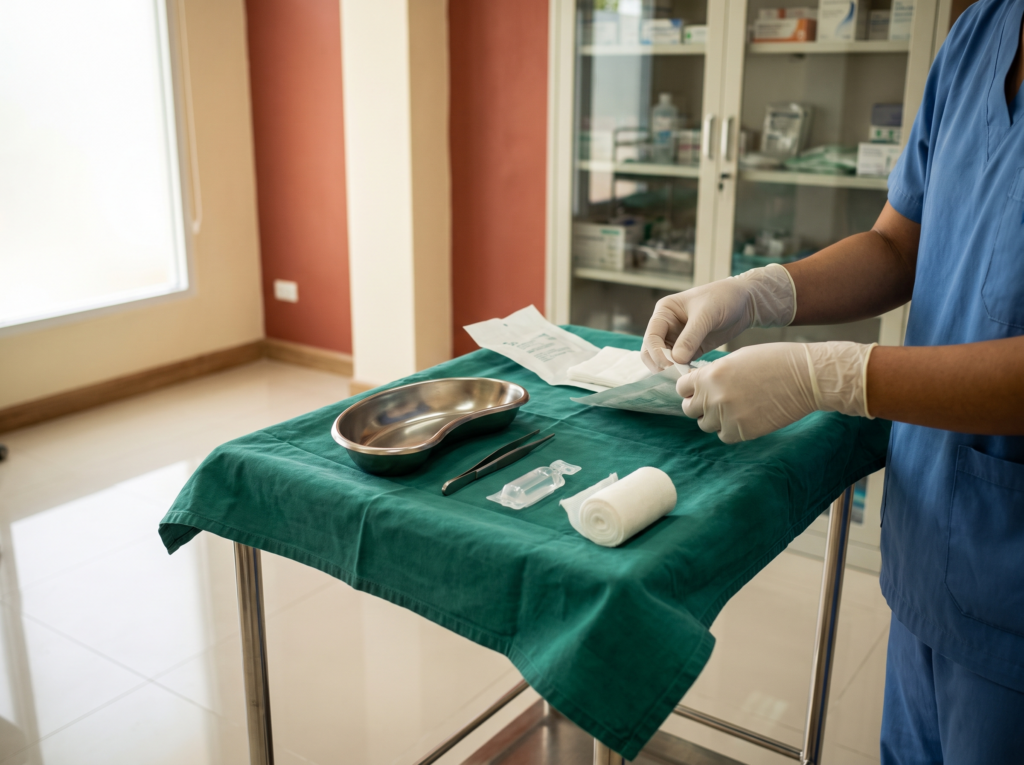
A small cut that seemed fine on Monday is red, hot and spreading by Wednesday. That is cellulitis, it is the commonest serious infection we treat on this island, and warm sea water is why. Cellulitis treatment in Koh Phi Phi needs starting early — it responds well to antibiotics at the beginning and becomes a hospital problem if it is left.
What it looks like
Redness that spreads outward from a wound with a defined advancing edge. Skin that is hot to touch, swollen and tender. Pain that increases rather than decreases after the first day or two.
As it progresses: red streaks running up the limb toward the nearest lymph glands, swollen tender glands in the groin or armpit, fever and chills, and feeling generally unwell.
The single most useful thing you can do is draw a pen line around the edge of the redness and note the time. If it has crossed that line a few hours later, the infection is advancing and needs treating now rather than tomorrow.
Why this island produces so much of it
Warm tropical sea water carries bacteria that temperate water does not, and Vibrio species in particular multiply fast and cause infections that spread more quickly than the usual skin organisms.
Every small break in the skin here meets that water repeatedly: coral grazes, sea urchin punctures, scratched insect bites, blistered sunburn, and cuts from rocks and boat ladders.
Then heat and humidity, which keep skin damp and slow healing, and sand, which grinds into wounds. A graze that would have scabbed over and been forgotten at home stays open here and gets colonised.
When it is an emergency
Come in immediately, at any hour, for any of these:
- Pain far out of proportion to how the skin looks
- Redness spreading visibly over hours
- Blisters, dark patches or skin turning purple or black
- A crackling feeling under the skin
- High fever with confusion, or a racing pulse
- Cellulitis on the face, or around the eye
- Any of this in somebody diabetic or immunosuppressed
Pain out of proportion to appearance is the sign that matters most. It can indicate infection tracking deep beneath the skin, which is rare and moves fast, and on an island where a hospital is a two-hour boat away that decision has to be made early — see emergency evacuation and emergency care.
What treatment involves
Antibiotics chosen for marine organisms rather than the standard skin ones, which is the part that most often goes wrong when somebody self-treats with tablets bought at a pharmacy or left over from home.
The wound cleaned and debrided properly, any retained material removed, and a dressing suited to a hot humid climate — see wound dressing. Elevation of the affected limb, which sounds trivial and measurably speeds resolution.
Where the infection is advanced, intravenous antibiotics rather than tablets, given at the clinic over a course of days. And review at twenty-four and forty-eight hours with the marked line, because the response to the first antibiotic is what tells us whether it was the right one.
Staying out of the water
Cellulitis means no swimming, snorkelling or diving until it has resolved. Sea water reintroduces exactly the bacteria being treated, and a wetsuit over an inflamed limb makes it worse.
That usually means several days, sometimes longer. It is unwelcome on a diving holiday and it is not a formality — people who carry on are the ones who end up needing intravenous treatment.
Where a course or booked dives are lost, we document it for the school and the insurer at the time rather than afterwards — see dive medical and travel insurance claims.
Finishing the course, and what happens if you do not
Take the full course even after it looks better, which is usually around day three. Stopping there is the single commonest reason cellulitis comes back, and the second round is harder to treat than the first.
Keep the limb elevated whenever you are sitting, keep the wound dressed and dry, and come back if the redness crosses the line, the fever returns, or the pain increases.
If you are flying home mid-course, take enough with you and get the diagnosis and antibiotic name in writing so a doctor at home can continue without restarting — see medical certificates.
Preventing it, which is mostly about the first day
Clean every break in the skin properly on the day it happens, with fresh water and soap rather than a rinse in the sea. Cover it, keep it dry, and change the dressing daily.
Stay out of the water while a wound is open. That is the rule people break, and it is the reason most of these infections exist.
Do not scratch bites open, dry between the toes, and treat athlete’s foot if you have it — cracked skin between the toes is a common and completely unsuspected entry point for a leg infection.
Who needs to take it more seriously
Diabetic travellers, in whom skin infections progress faster and complications are more common, and who may have reduced sensation in the feet so that the original wound was never felt.
Anybody immunosuppressed, on chemotherapy, or on long-term steroids. Anybody with liver disease, in whom certain marine infections are considerably more dangerous. Older travellers, and anybody with lymphoedema or previous cellulitis in the same limb, which recurs readily.
If any of that applies, come in at the first sign rather than after a day of watching. Both branches are staffed around the clock and this is precisely the kind of thing that should not wait for morning — a doctor hotel visit is available if walking on an infected leg is not sensible, or come to the walk-in clinic without an appointment.
Frequently asked questions
How do I know if a wound is infected?
Redness spreading with a defined edge, heat, swelling, and pain increasing after the first day. Draw a pen line around the redness and check a few hours later.
Why is this so common on Koh Phi Phi?
Warm sea water carries bacteria that spread faster than the usual skin organisms, and every graze here meets that water repeatedly.
Can I treat it with antibiotics from a pharmacy?
Marine infections need different antibiotics from ordinary skin infections. The wrong choice loses days you do not have.
When is cellulitis an emergency?
Pain out of proportion to how the skin looks, redness spreading over hours, dark or purple patches, high fever with confusion, or anything on the face.
Can I swim while it is being treated?
No. Sea water reintroduces exactly the bacteria being treated, and carrying on is what leads to intravenous treatment.
How long does it take to clear?
Usually several days on the right antibiotic, with review at twenty-four and forty-eight hours. Finish the whole course even once it looks better.
Do I need intravenous antibiotics?
Only if it is advanced or not responding to tablets. We give those at the clinic over a course of days.
Who is at higher risk?
Diabetic travellers, anybody immunosuppressed or with liver disease, and anybody who has had cellulitis in the same limb before.
The island arithmetic, and where we fit in it
English-speaking doctors on site, 24 hours a day. It is worth spelling out why that matters rather than leaving it as a claim. Koh Phi Phi has no hospital, no road connection and no ambulance service. Getting to an emergency department means a boat, and the scheduled boats run in daylight — so for a good part of every twenty-four hours, the island’s own clinic is not the convenient option, it is the only one. Everything about how we are staffed follows from that single fact.
Beyond the island, Doctor Phi Phi Takecare Clinic belongs to the Takecare Clinic group, which operates across Krabi and Phuket. The practical value of that is continuity: if your treatment carries on after you leave, the next clinic already holds your notes, and a referral is a phone call between colleagues rather than a stack of paperwork you have to carry yourself.
Coming in
Doctor Phi Phi Takecare Clinic is 24 hours, every day, and that is the building being open with a doctor in it rather than a phone line that answers. No appointment is needed at any point, and there is no hour at which turning up is inconvenient for us. There are 2 branches on the island, about ten minutes apart on foot, and both keep the same hours — so head for whichever is closer rather than looking for the right one. Walk in, or reach us on +66 82 140 3858 or WhatsApp. If you would rather not move, ask for a doctor hotel visit and we will come to you.
If it turns out this is beyond what the island can treat, the same conversation is where the boat and the hospital transfer start being arranged. That process is worth beginning early rather than late here, because the options genuinely narrow as the evening goes on — and a decision made at nine is a considerably better decision than the same one made at two in the morning.