Treating coral cuts on Koh Phi Phi
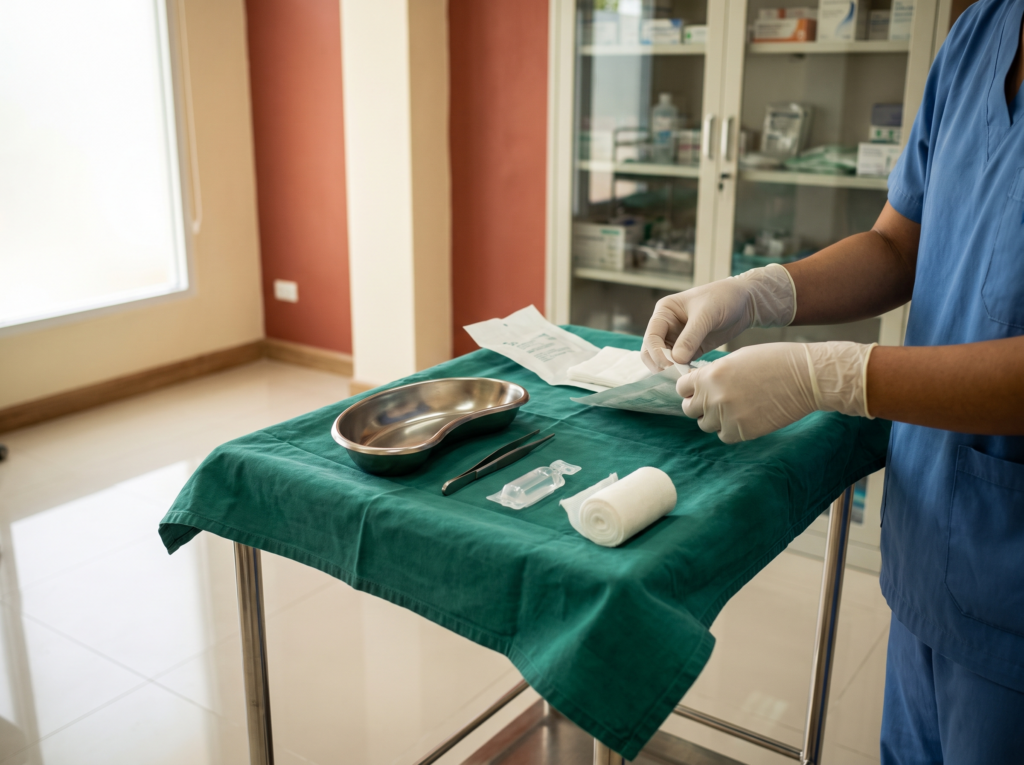
A coral graze looks like nothing. That is the problem with it. Days later the same graze is red, swollen, weeping and considerably more painful than when it happened. Coral cut treatment in Koh Phi Phi is about cleaning it properly at the start, because coral cuts are not ordinary cuts and they do not behave like ordinary cuts.
Why coral cuts go wrong
Three things happen at once. Fragments of coral skeleton break off and stay in the wound. Living coral tissue containing stinging cells is left behind. And marine bacteria are pressed into the tissue by the same contact.
Those bacteria are not the ones a graze at home meets. Vibrio species live in warm sea water, multiply quickly in the tropics, and cause infections that spread faster and need different antibiotics than the standard ones. The warm shallow water around this island is close to ideal for them.
Add the foreign material and the stinging cells, and you have a wound that will not settle on its own the way a scraped knee does. That is why a small coral cut can be more trouble than a much larger clean cut.
What to do straight away
Get out of the water and rinse thoroughly with clean fresh water, not sea water. Wash with soap and water and keep going for longer than feels necessary.
Scrub gently but properly. Coral fragments are what cause most of the trouble, and a wound that looks clean often is not — the debris sits below the surface. If a graze feels gritty when you touch it, there is material still in there.
Then an antiseptic, a clean dressing, and out of the water for the day. A brief rinse and carrying on snorkelling is the exact sequence that produces the infected coral cut we see three days later.
When to come in
Any of these means having it looked at rather than dressing it yourself:
- Any visible coral fragment or grit you cannot remove
- A deep or wide cut, or one that gapes
- A cut over a joint, on the hand, foot or face
- Increasing pain after the first day
- Redness spreading beyond the wound edge
- Swelling, discharge, or an unpleasant smell
- Fever, chills, or red streaking up the limb
Red streaking and fever mean infection is moving through the tissue and needs treating at once, at whatever hour it is noticed — see cellulitis and emergency care.
What proper cleaning involves
Local anaesthetic first, because thorough cleaning of a coral wound hurts and half-done cleaning is the reason these get infected.
Then irrigation under pressure, removal of every fragment we can find, and debridement of dead tissue. This is the part that decides how the next fortnight goes, and it takes time rather than a wipe with an antiseptic swab.
A tetanus check, antibiotics where the wound is deep, dirty or already showing signs, and a dressing suited to a wound in a hot humid climate rather than plain gauze — see wound dressing. Coral cuts are usually left open rather than closed, because stitches in a contaminated marine wound trap infection inside.
Staying out of the water, which is the hard part
A coral cut needs to stay dry and clean until it has closed. On a diving holiday that is genuinely unwelcome advice, and it is the single largest factor in whether this becomes a week or a month.
Sea water on an open coral wound reintroduces the bacteria you have just cleaned out. A waterproof plaster does not seal reliably underwater, and a wetsuit over a fresh wound rubs it open.
Most straightforward coral grazes need two or three days out. Anything deeper needs longer, and we would rather tell you the real number than an optimistic one — if that costs you dives, ask for it in writing while you are here, see travel insurance claims.
The delayed reaction people do not expect
Some coral cuts flare up a week or two after they seemed to be healing — itching, redness, small blisters and swelling around the site. That is a reaction to the stinging cells rather than infection, and it is treated differently.
Telling the two apart matters. A reaction itches; an infection hurts. A reaction stays around the wound; an infection spreads outward with a defined advancing edge. Fever belongs to infection.
Either way, come back rather than adding a leftover antibiotic cream and hoping. A fortnight-old coral cut that has flared is a five-minute problem to sort out and a much longer one to leave.
Where it happens on this island
Shallow reef at low tide is the main one. Snorkellers standing up to adjust a mask, in water that looked deeper than it was, take the graze on the shins, knees, tops of the feet and hands.
Boat entries and exits in shallow water. Getting knocked against reef in a swell. And bad buoyancy control on a first few dives, which is a fin against fire coral rather than a graze but ends the same way.
Fire coral deserves separate mention — it produces an immediate burning sting followed by a raised itchy welt, and behaves more like a jellyfish sting than a cut. Vinegar helps that one; it does not help an ordinary coral graze.
Avoiding it, and getting seen if you did not
Wear something. A rash vest, a dive skin, and reef-safe footwear for shore entries prevent almost all of these. Gloves are restricted at many dive sites, which is a conservation rule rather than a medical one, so buoyancy is the answer instead.
Never stand on reef, and never touch coral even where it looks solid. That is both a conservation matter and the reason most of these wounds exist.
Both branches are open at any hour, and a coral cut is worth cleaning properly the evening it happens rather than the morning after. For anybody on the eastern bays who cannot easily walk on a cut foot, a doctor hotel visit is available — or come to the walk-in clinic without an appointment.
Frequently asked questions
Why do coral cuts get infected so easily?
Coral fragments stay in the wound, stinging cells are left behind, and warm-water marine bacteria are pressed into the tissue. None of that happens with an ordinary graze.
Should I rinse it in sea water?
No. Fresh clean water and soap, thoroughly and for longer than feels necessary.
Can I keep diving with a coral cut?
Not until it has closed. Most straightforward grazes need two or three days out; deeper ones need longer.
Do coral cuts need stitches?
Usually the opposite. Closing a contaminated marine wound traps infection inside, so they are generally left open and dressed.
My cut has flared up two weeks later. Is it infected?
Possibly not. A reaction to the stinging cells itches and stays local; an infection hurts, spreads and comes with fever. Come back either way.
What are the warning signs?
Increasing pain after day one, spreading redness, discharge, an unpleasant smell, fever or red streaking up the limb.
Do I need a tetanus shot?
We check. If your last booster was over five years ago or you are unsure, we give one.
Are you open in the evening for this?
Yes, at any hour. A coral cut is best cleaned the evening it happens rather than the following morning.
The island arithmetic, and where we fit in it
English-speaking doctors on site, 24 hours a day. It is worth spelling out why that matters rather than leaving it as a claim. Koh Phi Phi has no hospital, no road connection and no ambulance service. Getting to an emergency department means a boat, and the scheduled boats run in daylight — so for a good part of every twenty-four hours, the island’s own clinic is not the convenient option, it is the only one. Everything about how we are staffed follows from that single fact.
Beyond the island, Doctor Phi Phi Takecare Clinic belongs to the Takecare Clinic group, which operates across Krabi and Phuket. The practical value of that is continuity: if your treatment carries on after you leave, the next clinic already holds your notes, and a referral is a phone call between colleagues rather than a stack of paperwork you have to carry yourself.
Coming in
Doctor Phi Phi Takecare Clinic is 24 hours, every day, and that is the building being open with a doctor in it rather than a phone line that answers. No appointment is needed at any point, and there is no hour at which turning up is inconvenient for us. There are 2 branches on the island, about ten minutes apart on foot, and both keep the same hours — so head for whichever is closer rather than looking for the right one. Walk in, or reach us on +66 82 140 3858 or WhatsApp. If you would rather not move, ask for a doctor hotel visit and we will come to you.
If it turns out this is beyond what the island can treat, the same conversation is where the boat and the hospital transfer start being arranged. That process is worth beginning early rather than late here, because the options genuinely narrow as the evening goes on — and a decision made at nine is a considerably better decision than the same one made at two in the morning.