Treating insect bites on Koh Phi Phi
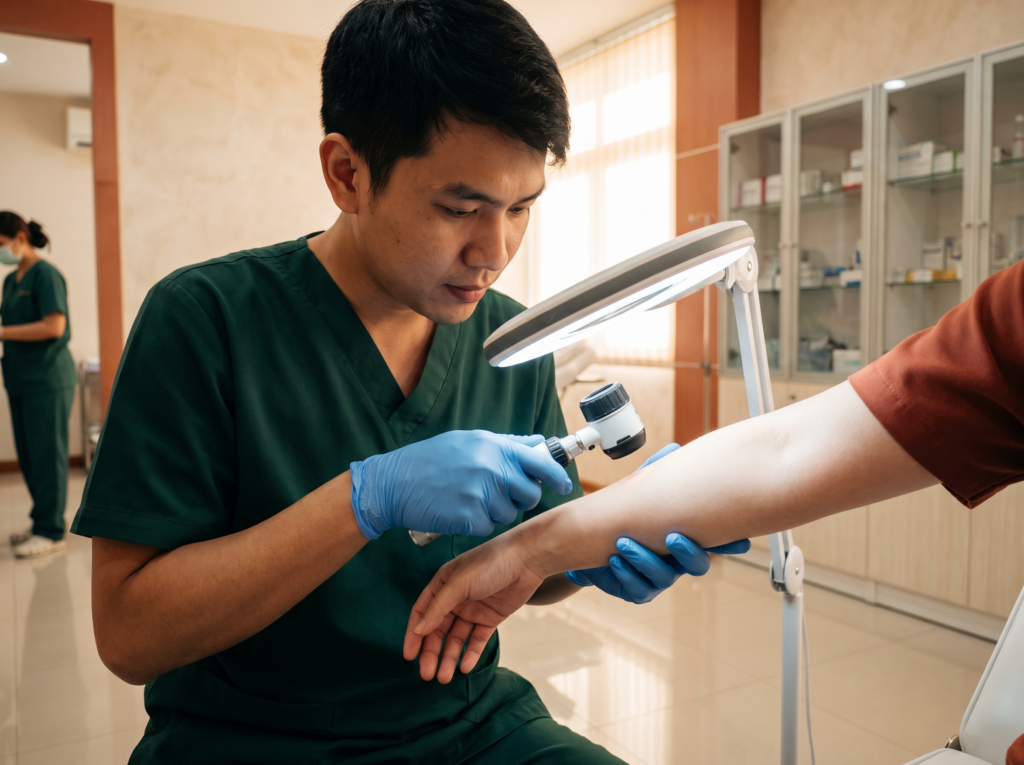
Bites are the background noise of a tropical holiday, and most need nothing more than an antihistamine. What matters is the small number that are not what they look like — an infected bite, an allergic reaction, or the mosquito bite that turns into a fever a week later. Insect bite treatment in Koh Phi Phi sorts those apart quickly.
What bites you here
Mosquitoes, in two useful categories. The night biters are a nuisance; the daytime Aedes are the ones that carry dengue, and they bite most actively in the hours after sunrise and before dusk.
Sandflies on the beaches, which produce a bite far itchier than its size suggests and which people scratch open. Ants, including a few species that sting rather than bite. Bedbugs in cheaper accommodation, biting in lines or clusters. Centipedes, which are genuinely painful and present here.
And spiders, which are blamed for a great deal they did not do. Most “spider bites” are infected bites of some other kind, or small boils. That distinction matters because it changes the treatment entirely.
Ordinary bites, and calming them down
Cool the area, wash it, and leave it alone. Antihistamine tablets work better than creams for widespread itching. A mild steroid cream helps a badly inflamed bite, and calamine helps generally.
The scratching is the real problem. Broken skin in this climate, particularly on the lower legs, is how bites become infections — and warm damp skin, sand and sea water are an efficient combination for that.
Cut nails short, take an antihistamine at night when itching is worst, and cover an itchy bite with a plaster if you scratch in your sleep. Unglamorous, and it prevents most of the bite infections we treat.
When a bite has become infected
Signs to act on: increasing pain and redness after day two rather than decreasing, warmth, swelling, yellow discharge or a crust that keeps returning, red streaking up the limb, or fever.
Spreading redness with a defined advancing edge is cellulitis, which is common here and needs antibiotics rather than cream. Drawing a pen line around the redness and checking in a few hours is a genuinely useful test — if it has crossed the line, come in.
A bite that has become a painful lump with a head on it is an abscess and may need draining rather than tablets. That is a ten-minute procedure at minor surgery and it does not get better on antibiotics alone.
Allergic reactions, and the emergency version
Large local reactions — a bite that swells to the size of a hand, hot and firm — look alarming and are usually not dangerous. Antihistamines, a steroid, elevation and time.
Anaphylaxis is different and is an emergency. Call 1669 and come in immediately for:
- Swelling of the lips, tongue, throat or face
- Difficulty breathing, wheezing, or a tight throat
- Widespread hives away from the bite site
- Dizziness, fainting or collapse
- Vomiting with any of the above
If you carry an adrenaline pen, use it rather than waiting to see. Both branches are staffed at any hour, and this is minutes-matter territory — see emergency care.
The bites that need watching for a week
A mosquito bite is only a problem retrospectively. Dengue appears four to seven days later as sudden high fever, severe headache behind the eyes and deep muscle pain, and the bite itself is long forgotten by then.
So the rule worth carrying is not about the bite. It is that any fever in the week or two after being in this region deserves a look rather than being assumed to be a virus from the flight — see fever treatment and blood tests.
Malaria is not present on Phi Phi, but travellers come here from places where it is, and the incubation period is long enough that the exposure was elsewhere. Where you have been in the last month is a question worth answering honestly.
Repellent that actually works
DEET at twenty to fifty percent, or picaridin, which is less unpleasant on skin and does not dissolve plastics. Higher concentrations of DEET last longer rather than working better.
Apply after sunscreen, not before, and reapply after swimming and heavy sweating — which in this heat is more often than the bottle suggests. Treat clothing as well as skin, since bites through thin fabric are common.
And use it in the morning, not just the evening. That single change targets the daytime mosquito that matters most here, and it is the one almost everybody skips because the association is with dusk.
Bedbugs, and how to tell
Bites in a line or a tight cluster, appearing overnight, usually on skin that was exposed while sleeping — arms, shoulders, neck, ankles. Intensely itchy, often not felt at the time.
The confirmation is in the room rather than on you: dark specks along the mattress seams and the edge of the bed base, and sometimes a distinctive musty smell.
Treatment for you is straightforward — antihistamines, steroid cream, and not scratching. Treatment for the situation is a room change and putting your bag through a hot wash and a hot dryer before it travels on, because otherwise the problem follows you to the next island.
Getting seen
Most bites need nothing. The reason to come in is a bite that is spreading, a bite that has become a lump, a reaction beyond the local area, or a fever in the days afterwards.
Photographs of how it looked yesterday are genuinely useful, since the change over time tells us more than the current appearance. Bring whatever you have already applied, including anything from a pharmacy.
Both branches are open around the clock, and bites tend to become alarming in the middle of the night. For anybody on the eastern bays, or a child too miserable to travel, a doctor hotel visit is available at any hour — otherwise the walk-in clinic takes people without appointments.
Frequently asked questions
How do I stop a bite itching?
Antihistamine tablets work better than creams for widespread itching. A mild steroid cream helps a badly inflamed one. The main thing is not scratching.
When is a bite infected?
Increasing pain and redness after day two, warmth, discharge, red streaking or fever. Draw a pen line around the redness and check in a few hours.
Which mosquito carries dengue?
Aedes, which bites in daylight — most actively after sunrise and before dusk. That is why morning repellent matters as much as evening.
When is a reaction an emergency?
Swelling of the lips, tongue or throat, difficulty breathing, widespread hives, or collapse. Use an adrenaline pen if you have one and call 1669.
Was it a spider?
Probably not. Most suspected spider bites are infected bites of another kind or small boils, and that changes the treatment entirely.
What repellent should I use?
DEET at twenty to fifty percent, or picaridin. Apply after sunscreen, reapply after swimming, and treat clothing as well as skin.
How do I know if it is bedbugs?
Bites in lines or clusters appearing overnight on exposed skin, plus dark specks along the mattress seams.
I got bitten last week and now have a fever. Is that connected?
It can be. Dengue appears four to seven days after the bite. Any fever in the week or two after being here deserves a look.
The island arithmetic, and where we fit in it
English-speaking doctors on site, 24 hours a day. It is worth spelling out why that matters rather than leaving it as a claim. Koh Phi Phi has no hospital, no road connection and no ambulance service. Getting to an emergency department means a boat, and the scheduled boats run in daylight — so for a good part of every twenty-four hours, the island’s own clinic is not the convenient option, it is the only one. Everything about how we are staffed follows from that single fact.
Beyond the island, Doctor Phi Phi Takecare Clinic belongs to the Takecare Clinic group, which operates across Krabi and Phuket. The practical value of that is continuity: if your treatment carries on after you leave, the next clinic already holds your notes, and a referral is a phone call between colleagues rather than a stack of paperwork you have to carry yourself.
Coming in
Doctor Phi Phi Takecare Clinic is 24 hours, every day, and that is the building being open with a doctor in it rather than a phone line that answers. No appointment is needed at any point, and there is no hour at which turning up is inconvenient for us. There are 2 branches on the island, about ten minutes apart on foot, and both keep the same hours — so head for whichever is closer rather than looking for the right one. Walk in, or reach us on +66 82 140 3858 or WhatsApp. If you would rather not move, ask for a doctor hotel visit and we will come to you.
If it turns out this is beyond what the island can treat, the same conversation is where the boat and the hospital transfer start being arranged. That process is worth beginning early rather than late here, because the options genuinely narrow as the evening goes on — and a decision made at nine is a considerably better decision than the same one made at two in the morning.